
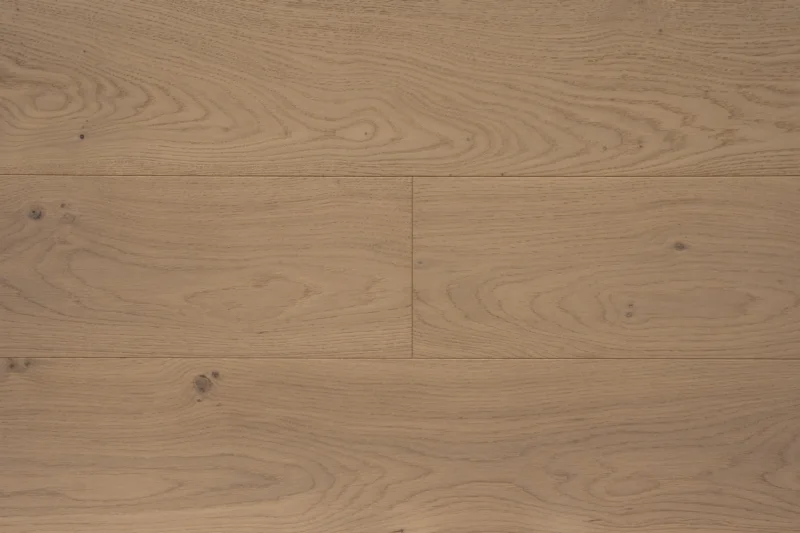
Wood flooring on a budget is absolutely achievable — but only if you know which corners are safe to cut and which aren’t. The cheapest option is rarely the best value over time. Getting the right product for your budget requires understanding what the different floor types actually offer, and where the real costs lie.
Why Cheaper Isn’t Always Better
The appeal of a low price tag is understandable, but budget flooring choices often backfire. Thin laminate floors can delaminate within a few years, cannot be refinished, and typically sound hollow underfoot. Very cheap solid wood can be poorly graded, prone to warping, and may require expensive specialist installation to lay correctly. The cost of lifting and replacing a failed floor — including labour, waste disposal, and the new floor itself — usually far exceeds what was saved upfront.
Why Engineered Wood Offers the Best Value
For homeowners who want the genuine look and feel of real wood without the premium price or the limitations of solid timber, engineered wood flooring hits the sweet spot. It costs more than laminate but significantly less than comparable solid wood — and it delivers far more than laminate in return. Engineered boards carry a real hardwood surface layer, so the look, texture, and warmth are authentic. They can also be sanded and refinished, meaning a single floor can last decades with the right care.
How Engineered Boards Are Constructed
Engineered flooring is built in three bonded layers: a top wear layer of genuine solid hardwood (typically 3–6mm thick on quality boards), a cross-ply plywood core that provides structural stability, and a balancing backing layer. The cross-ply construction is the key engineering insight — it means the board resists the expansion and contraction that causes solid wood to warp, gap, or buckle under temperature and humidity changes. This makes engineered boards suitable for installation over underfloor heating, on concrete subfloors, and in rooms where solid wood would struggle.
Stretching Your Budget Further
A few practical choices can reduce cost without reducing quality. Choosing a rustic or character grade board — which features natural knots, colour variation, and grain movement — gives an equally attractive but genuinely different look to prime grade, and typically at a lower price point. Opting for a brushed or oiled finish rather than a high-gloss lacquer can also reduce cost, and these finishes are generally easier to maintain and touch up over the floor’s lifetime. Buying slightly more than you need — typically 10% extra for wastage — prevents costly colour-matching headaches later if a board needs replacing.
Installation: Where to Invest
Flooring installation is not the place to economise if you want the floor to perform. Poorly prepared subfloors, incorrect fixing methods, and skipped acclimation are the most common causes of premature floor failure — regardless of the quality of the boards themselves. A competent professional installer will assess the subfloor flatness, moisture content, and suitability for your chosen product before laying a single board. The installer’s fee is typically 10–20% of total project cost; it is money well spent.
A Floor That Pays for Itself
A quality engineered wood floor, properly installed and maintained, adds tangible value to a property and typically outlasts the homeowner’s tenure. When you factor in the lifespan, the refinishing potential, and the genuine aesthetic quality compared to laminate alternatives, the cost-per-year of a good engineered floor is often lower than the cheaper alternatives it’s being compared against. Budget flooring done right means choosing quality at an appropriate price point — not cutting costs in ways that create expense later.