Choosing a wood floor species is one of the most important aesthetic decisions in any flooring project. Colour, grain pattern and hardness all vary considerably between species. Your choice defines the character of the room for years to come. This guide covers the most common hardwood species — what they look like and where they work best.
Oak: The British Benchmark
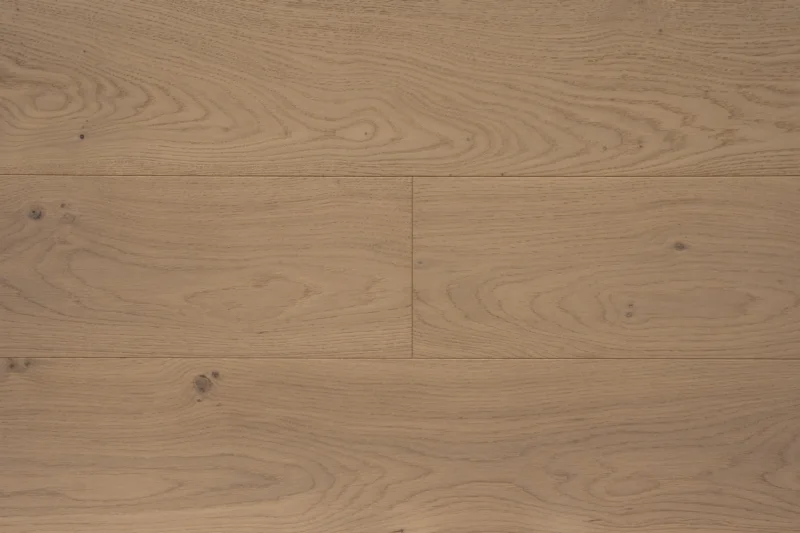
Oak is by far the most popular species in the UK — and for good reason. European oak offers excellent dimensional stability and a neutral tan-to-honey colour palette. Its medium-open grain takes stains and finishes predictably. White oak tends towards cooler, greyer tones; red oak is warmer with a more pronounced grain. Both come in a wide range of grades, from tight-grained prime to characterful rustic. Oak suits almost any interior style — from contemporary Scandi to traditional period. It is the natural default choice for most residential projects.
Maple: Pale, Fine, and Durable
Hard maple is one of the most durable domestic hardwoods available. It is a popular choice for kitchens, hallways and commercial spaces. The colour is pale and consistent — creamy white to light tan. The grain is very fine and close, with minimal character features. Classic grade maple includes some natural mineral streaks and heartwood variation, giving a slightly warmer look. Maple is difficult to stain evenly due to its dense grain. Most installers use it in its natural colour with a clear lacquer or hardwax oil finish.
Beech: Medium Tone, Versatile Character
European beech ranges from light cream to medium tan-brown, with a fine, consistent grain and a smooth, even surface. It is harder than oak and widely used in furniture. That hardness makes it well suited to flooring in high-traffic areas. Beech is less dimensionally stable than oak, however. It is more sensitive to humidity changes and is not suitable over underfloor heating — seasonal movement can cause problematic gapping. In well-controlled environments, beech is a handsome, practical floor.
Walnut: Rich and Distinctive
Walnut is one of the most visually striking hardwood options. Colours range from ivory sapwood through mid-brown to deep chocolate heartwood. The variation within a single floor can be dramatic and beautiful. Walnut suits premium projects where character and individuality are priorities. It has a straight, medium grain and a natural lustre that deepens with age. Walnut is softer than oak and shows wear more readily in high-traffic areas. In the right setting, its appearance more than compensates.
Jatoba (Brazilian Cherry): Bold and Long-Lasting
Jatoba — often sold as Brazilian cherry — is one of the hardest commercially available flooring timbers. Its Janka hardness rating is roughly twice that of European oak. The colour starts as an orange-reddish brown and darkens with light exposure, deepening to a rich reddish-mahogany over time. The grain is interlocked and moderately coarse, giving the floor a bold, characterful look. Jatoba suits high-traffic areas and open-plan spaces where durability is a priority. Factor its dramatic colour-shift with sunlight into the design decision.
Kempas and Merbau: Tropical Hardwood Options
Kempas is a South-East Asian hardwood with a coarse, open grain. Its colour ranges from light tan to a dark orangey-red. It is very hard and durable, with a slightly rustic, textural character that suits contemporary and industrial interiors. Merbau is similarly tropical but denser, with a straight grain and a deep gold to copper-brown colour. Merbau is impermeable to water and highly resistant to wear — a practical choice for busy households. Both species are typically available in wider plank formats that emphasise their natural colour range.
Tigerwood and Ipe: Statement Species
Tigerwood — also known as goncalo alves — is recognisable by its bold contrasting stripes in reddish-orange and dark brown. It is a dramatic, statement floor. Use it in rooms where the flooring is the focal point of the design. Ipe (pronounced ee-pay) is one of the densest and hardest commercial timbers in the world. It is deep dark brown with a fine grain. Ipe requires carbide-tipped tooling to cut and is demanding to machine. In domestic settings, it is essentially impervious to wear. Its density gives it an almost stone-like quality underfoot.
Cherry: Warmth That Grows Over Time
American cherry is a medium-density hardwood with a warm colour range. Freshly cut boards are pale pinkish-tan. After several years of light exposure, they deepen to a rich reddish-amber. This colour transformation is dramatic and defines cherry’s character. Design floors with it in mind — strong directional light or fixed furniture can cause uneven patina development. Cherry has a fine, even grain and machines to a smooth surface. It takes oil and lacquer finishes exceptionally well.