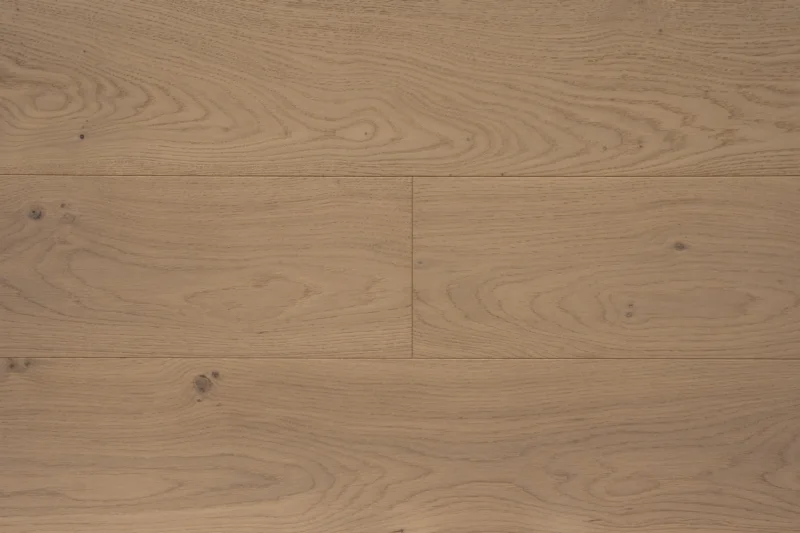
Solid wood flooring is one of the most beautiful and enduring materials you can lay in a home. Its warmth, depth and the fact that you can sand and refinish it multiple times make it genuinely special. But solid wood has real limitations too. Engineered flooring addresses many of them. Understanding both sides is essential before you commit. Here are the honest pros and cons.
Cost
Solid wood is the most expensive flooring option, both to buy and to install. Board prices are higher than comparable engineered products. Installation also requires a specialist — a fitter must glue or secret-nail solid wood through the tongue to a timber subfloor. That adds labour time and cost compared to a floated engineered system. For comparable visual quality, expect to pay 20–40% more for solid wood than engineered. Whether that premium is worth it depends on what you value most. Consider the refinishing potential and the prestige of a true solid floor.
Installation Requirements
Solid wood cannot float — a fitter must mechanically fix it to a stable timber subfloor. This immediately rules it out for direct installation over concrete without a significant (and expensive) intermediate layer. You also need to secret-nail the boards at every joist crossing. That is more labour-intensive than gluing down engineered boards or floating them with click-lock profiles. Installation is also more sensitive to moisture, subfloor flatness and acclimatisation. Mistakes at any stage can cause lasting problems.
Stability and Moisture Sensitivity
Wood is hygroscopic — it expands and contracts with changes in relative humidity. Solid wood moves more than engineered products because the movement runs through the full board thickness. An engineered board’s cross-ply core resists that dimensional change. Seasonal gaps are normal in winter, when central heating dries the air. Slight cupping can appear in summer as humidity rises. Where humidity varies widely, this movement causes lasting problems. Plan for it at the design and installation stage.
Where Solid Wood Cannot Be Used
Two environments rule out solid wood entirely: basements and rooms with underfloor heating. Below-grade spaces have humidity levels that are too variable and too high for solid wood to stay stable. Underfloor heating (UFH) dries the air from below, causing rapid and extreme board contraction. Most solid wood manufacturers void the warranty if you install their product over UFH. For these applications, use engineered wood — particularly products rated for UFH use.
Durability and Surface Wear
Solid wood can be more vulnerable to surface wear than modern lacquered or oiled engineered products. It scratches more easily in high-traffic areas. Softer species — such as pine or beech — show wear faster than dense hardwoods like oak, walnut or jatoba. The key advantage is refinishing potential. A 20mm solid board lets you sand and refinish many more times than an engineered board’s 3–6mm hardwood layer. That extends the floor’s useful life over generations rather than decades.
The Verdict: When to Choose Solid Wood
Solid wood suits ground and first-floor rooms in properties with stable humidity and an existing timber subfloor. The long-term refinishing potential must justify the higher upfront cost. It is the natural choice for period properties, listed buildings and luxury refurbishments where authenticity is a priority. For everything else — concrete subfloors, underfloor heating, basement conversions, budget-conscious projects — engineered wood delivers comparable aesthetics with far fewer compromises.