
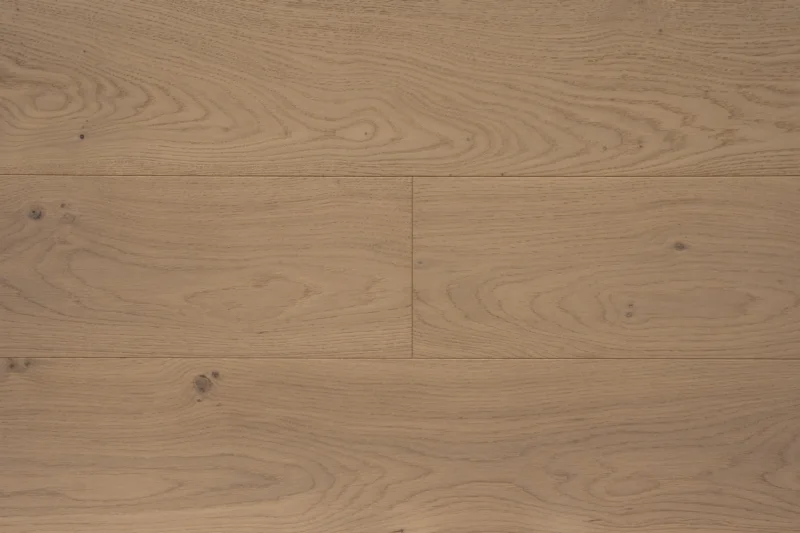
Underfloor heating (UFH) is increasingly common in UK homes — and one of the first questions homeowners ask is whether they can have wood flooring over it. The short answer is yes, but only with the right product, properly specified and installed. Wood is a natural material that responds to heat and moisture, and pairing it with UFH requires careful choices to ensure the floor performs well for years to come.
Why Wood and Underfloor Heating Need Careful Matching
UFH heats a room from below, raising the surface temperature of the floor and simultaneously reducing the relative humidity in the room above — much like a very gentle but persistent underfloor radiator. Solid wood reacts badly to this: the constant heat draws moisture out of the boards, causing shrinkage, gapping, and in severe cases, cracking or cupping. Not all wood floors are suitable, and using the wrong product over UFH can void the manufacturer’s warranty and leave you with an expensive problem.
Engineered Wood: The Recommended Choice for UFH
Engineered wood flooring is the standard recommendation for use with underfloor heating. Its cross-ply plywood core resists the dimensional movement that would cause solid wood to fail — the individual veneers in the core run in alternating directions, neutralising the forces that would otherwise cause the board to expand, contract, or distort. Most quality engineered boards are rated for use with UFH at surface temperatures up to 27°C, provided the floor heating is commissioned and managed correctly.
Best Wood Species for UFH Installations
Not all species behave equally under UFH. Oak is by far the most commonly recommended species — it is dimensionally stable, widely available in engineered form, and has a long track record of performing reliably over heated subfloors. Species to avoid include maple and beech, which are notoriously reactive and can expand and contract by up to 7mm per square metre in response to humidity changes — too much movement for a UFH installation to accommodate without visible gapping or damage.
Board Width and Thickness Recommendations
Narrower boards experience less total movement than wide boards — a principle that becomes especially important with UFH. As a general rule, boards no wider than 130mm are recommended for heated floors. Very wide boards (180mm+) amplify seasonal movement and are at higher risk of gapping in winter when the heating is running hard. Board thickness also matters: thicker boards act as better insulators, slowing heat transfer and reducing efficiency — aim for boards no thicker than 18–20mm total over a water-based UFH system, and check the system’s tog rating allowance.
Commissioning and Temperature Guidelines
Before laying any wood floor over UFH, the system must be commissioned: run from cold up to operating temperature over a period of at least two weeks, then held at temperature, then run back down to cold again. This process removes residual construction moisture from the screed and stabilises the subfloor. After commissioning, the floor must be installed with the heating off. Once laid, the system is then gradually raised over 7–10 days. Maximum floor surface temperature should not exceed 27°C, and the system should never be turned completely off for extended periods — even in summer — as rapid temperature swings cause the greatest stress.
Aftercare and Long-Term Management
Managing humidity is as important as managing temperature. Indoor relative humidity should be kept between 40–60% year-round to minimise seasonal board movement. In winter, when UFH is running hard and the air is dry, a humidifier can prevent excessive gapping. Avoid rugs and heavy mats over UFH areas — they trap heat, cause hot spots, and can stress the floor above. With the right product, correct installation, and consistent environmental management, a wood floor over UFH will perform beautifully and last for decades.